What is the nature of our Ahfirian society? What kind of relationship binds the members of this community despite their ideological and intellectual differences? What brings them together, and what separates them? Do these political and intellectual differences still allow them to live together in harmony, mutual respect, and understanding?
To address these questions, we must examine our reality with a critical and analytical perspective while considering its family, social, and historical dimensions.
What follows is neither a sociological study nor a comprehensive analysis of Ahfir society, its characteristics, or its historical evolution. Rather, it is a personal reflection by one of the city’s sons, perhaps capable of encouraging others to revisit their memories and contribute perspectives that have yet to be shared.
At the family level, two completely opposite situations can be observed. The first is that of unhealthy rivalry, conflict, and sometimes even violence between families linked by blood and kinship. A brother may oppose his brother, a son his father, nephews their uncle, and so on.
The second situation is the exact opposite: unconditional support for a relative whenever he is in conflict with someone outside the family, whether the matter concerns land, honor, or any other issue, regardless of whether he is right or wrong. This behavior has little to do with the Prophet’s teaching, “Support your brother whether he is an oppressor or oppressed.” Instead, it reflects tribalism and blind loyalty to family and kinship.
In such circumstances, morality becomes the first victim. This attitude often reveals a flawed upbringing that is mistakenly justified in the name of religion within a society that prides itself on being devout and conservative. Yet daily reality demonstrates the shortcomings of this approach and the confusion between genuine religious values and inherited customs and traditions.
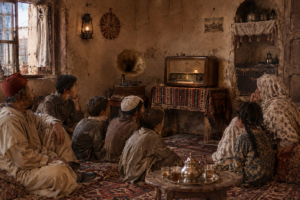
On the social level, we must reflect on the art of caring for one another. Solidarity, mutual assistance, and charitable acts are often motivated by the desire to attain divine reward and paradise. After all, who among us does not hope for paradise?
However, reducing spiritual aspiration solely to charitable projects can lead us to believe that we alone possess the truth and the keys to salvation. Such a mindset may foster a form of selfishness because it can unintentionally reinforce social inequalities within a community that should guarantee dignity and equality for all.
A person who spends a lifetime waiting for the generosity of others often loses dignity, influence, and the ability to make their voice heard. As a popular saying in Ahfir states: “He who has no money has no valued opinion.”
If God has honored humanity, some human beings strip others of that dignity by depriving them of their rights. Worse still, many accept this situation, resigning themselves to fate instead of demanding justice.
When we say to someone, especially a poor or needy person, “Take care of yourself,” we are not merely referring to clothing, food, or appearance. The deeper meaning is to preserve one’s dignity, achieve full humanity, and live freely rather than becoming dependent on the generosity of others.
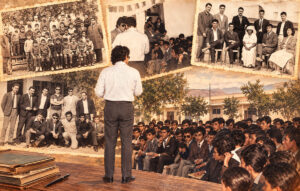
We must assess the moral significance of the relationships that unite our families and society. It is admirable to praise those who generously donate to build mosques. Yet one may wonder whether the same enthusiasm would exist if the cause were to build a library worthy of a nation whose first divine command was “Read.”
If we applied a true hierarchy of priorities, we might conclude that our need for knowledge and reading is greater than our need for additional mosques. Simply put, we have become a community that prays a great deal but reads very little.
Reading is the paved road leading to knowledge, and knowledge leads to freedom. As Jesus Christ said, “You shall know the truth, and the truth shall set you free.”
Preventing the spread of knowledge is an unforgivable act because knowledge is also what allows us to understand God more deeply. Although our social relations may appear simple, they are often highly complex and sometimes colored by hypocrisy and a lack of spontaneity.
Freedom allows each individual to become a unique intellectual and spiritual being. Yet reality suggests that many people in Ahfir tend to think and act in remarkably similar ways. Political and ideological affiliations frequently overshadow genuine debate, while insults and hostility sometimes replace reasoned argument.
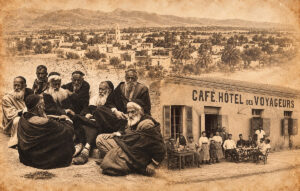
As for our relationship with Ahfir’s history, it closely resembles our relationship with Islamic history. We often approach it with reverence rather than critical reflection. We remember the past with nostalgia, almost as we remember our deceased loved ones.
Documenting Ahfir’s history for present and future generations is undoubtedly valuable. However, when history is portrayed only as glorious and flawless, we risk distorting and mutilating it.
Our responsibility is to learn from the past in order to build a better future. The objective is not to blame our ancestors but to challenge harmful inherited traditions that continue to shape contemporary attitudes.
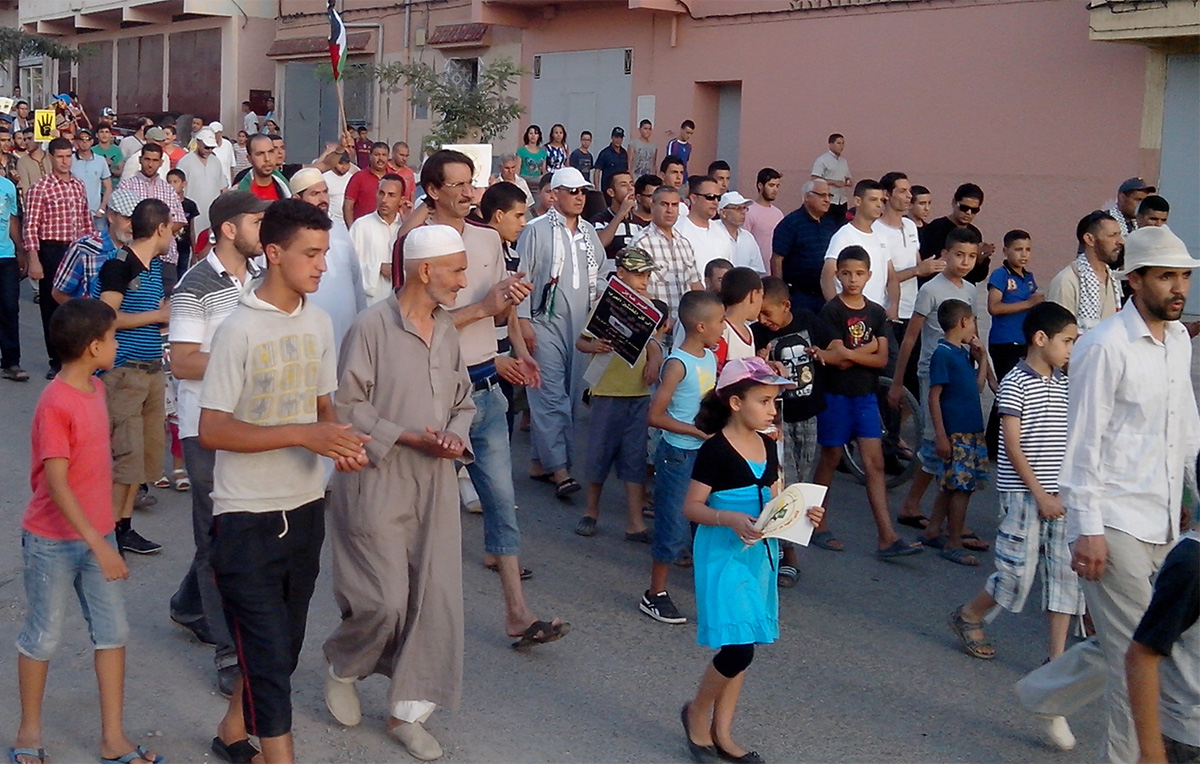
Finally, the reason I wrote this article during the Arab uprisings was my deep conviction that the true revolution is, above all, a cultural revolution. A revolution of consciousness that helps us recognize our reality and strive for freedom, dignity, and a better life.
Religion should not be manipulated for political purposes, nor distorted by some of its representatives. The responsibility resting upon all of us goes beyond solving social and economic issues. It is about contributing to the preservation of a civilization threatened by decline and disappearance.
Mohamed Harrak
Paris, March 5, 2012