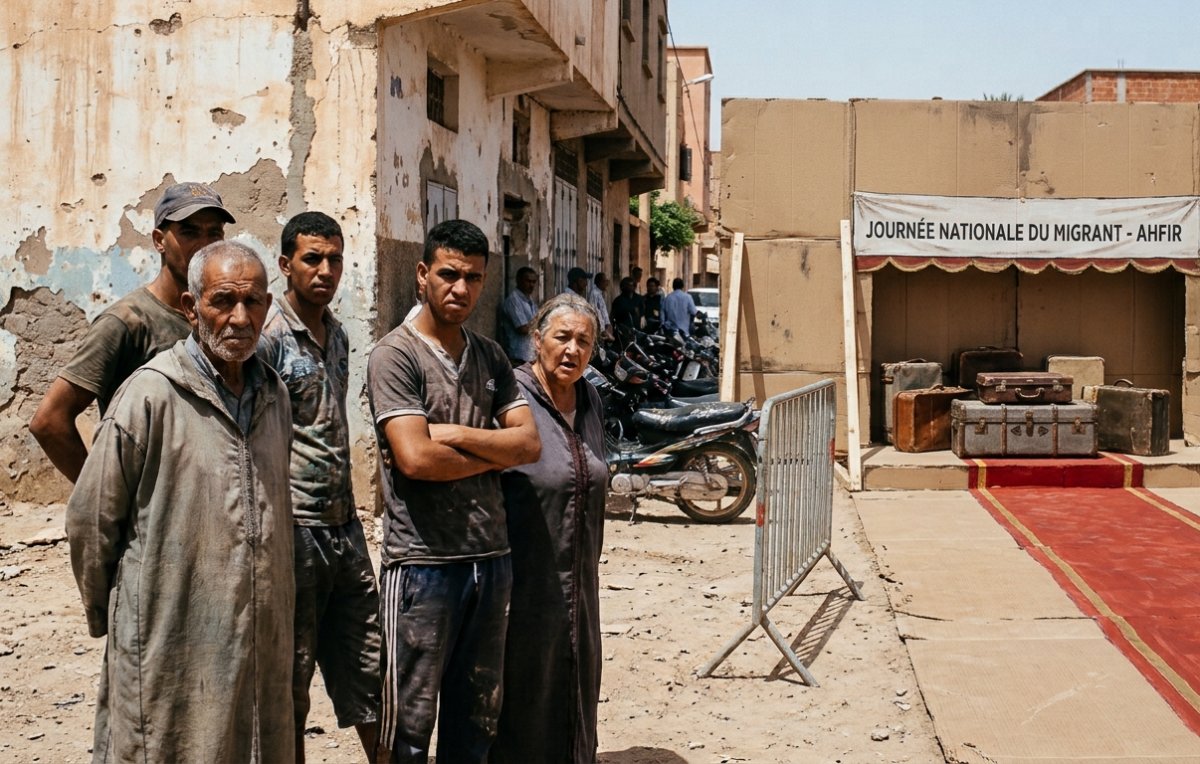
As one of the many Moroccans who had to leave his country for economic reasons and seek opportunities in more developed nations, I have never been able to embrace the idea of this day that Moroccan decision-makers established as a celebration of Moroccans living abroad. It is August 10, known as the National Day of the Moroccan Community Residing Abroad.
Many people may agree with my humble opinion: Moroccans often seem to earn attention and respect from their own officials only after leaving their homeland, and even then, such attention often appears superficial and insincere.
If I were naïve enough to believe, as some would like us to, that the so-called “Moroccans of the World” truly enjoy the full care and consideration of those who created this national day, I would ask a number of questions that prevent me from celebrating this unusual occasion.
I ask: is there really a Moroccan living overseas who considers this day important? Does the Moroccan diaspora need symbolic celebrations and commemorations, or does it instead need people willing to listen to its real problems and work toward genuine solutions by changing the policies that currently govern the affairs of Moroccans abroad?
Designating a national day to celebrate those who packed their bags and left for more developed nations raises another question: is it reasonable that Morocco does not fully benefit from the talents, skills, intellectuals, athletes, and professionals it produces, while other countries welcome them, invest in them, and profit from their abilities?
To those who invented this celebration of the migrant: have you forgotten the embarrassing realities behind the ever-growing phenomenon of migration? It affects the educated and the uneducated, the young and the old, men and women alike. Nor should we forget the thousands who lost their lives in the Mediterranean Sea, whose bodies disappeared beneath the waves.
Where did this strange holiday come from? Are you proud of those who leave their homeland, or should you instead feel ashamed that so many Moroccans could not find sufficient reasons to remain in their own country?
Am I wrong in saying that millions of migrants have become, in the eyes of some decision-makers, nothing more than numbers and files used for narrow economic calculations and empty political formulas?
The truth visible to anyone with an independent mind is that Moroccans abroad, whom official discourse affectionately calls “our Moroccan brothers residing overseas,” are in fact a clear mirror reflecting the shortcomings of official policies in addressing development challenges. They also stand as evidence of political and economic failures that have prevented the country from overcoming its stagnation.
The answers to these questions are as obvious as the contradictions of those who seem to have lost all sense of embarrassment, celebrating while failing to put the country on the path of genuine democracy and comprehensive development, so that citizens may one day enjoy decent living conditions without being forced to migrate.
My firm belief that those who hold power in Morocco care little about such words is matched only by my conviction that the official discourse surrounding migration ultimately serves to normalize and promote the culture of departure, encouraging the idea that leaving one’s country is a legitimate and desirable success. The annual celebration of National Migrant Day is merely one element of that broader narrative.
In the end, the true celebrations for Moroccans abroad will be the days when they hear real news of a Morocco moving steadily toward respect for human dignity, development, and democracy. The migrant’s true holiday will be the day of his final return to live among his people, within his culture and native environment, contributing to the construction of a Morocco that belongs to all.
Until that long-awaited day arrives, August 10 remains, in my view, an attempt to mislead public opinion and a disguised insult hidden behind the language of welcome and celebration.
By Monir El Ghiouani (2010)