There is no doubt that Eastern Morocco, in general, is distinguished by a unique dialect that differs from other dialects in many respects, including its vocabulary, expressions, and pronunciation.
Within this linguistic group, there are also notable differences between its various regions. The environment of Ahfir, in particular, possesses specific characteristics that may stem from a complex heritage combining traces of its Amazigh past, its proximity to and coexistence with Algerian neighbors, as well as the lingering influences of the French and Spanish languages. Of course, one must not overlook the fundamental and original role of Classical Arabic, from which everyone draws. It may also be appropriate to add the influence of the Bedouin way of life that dominated the town for a certain period.
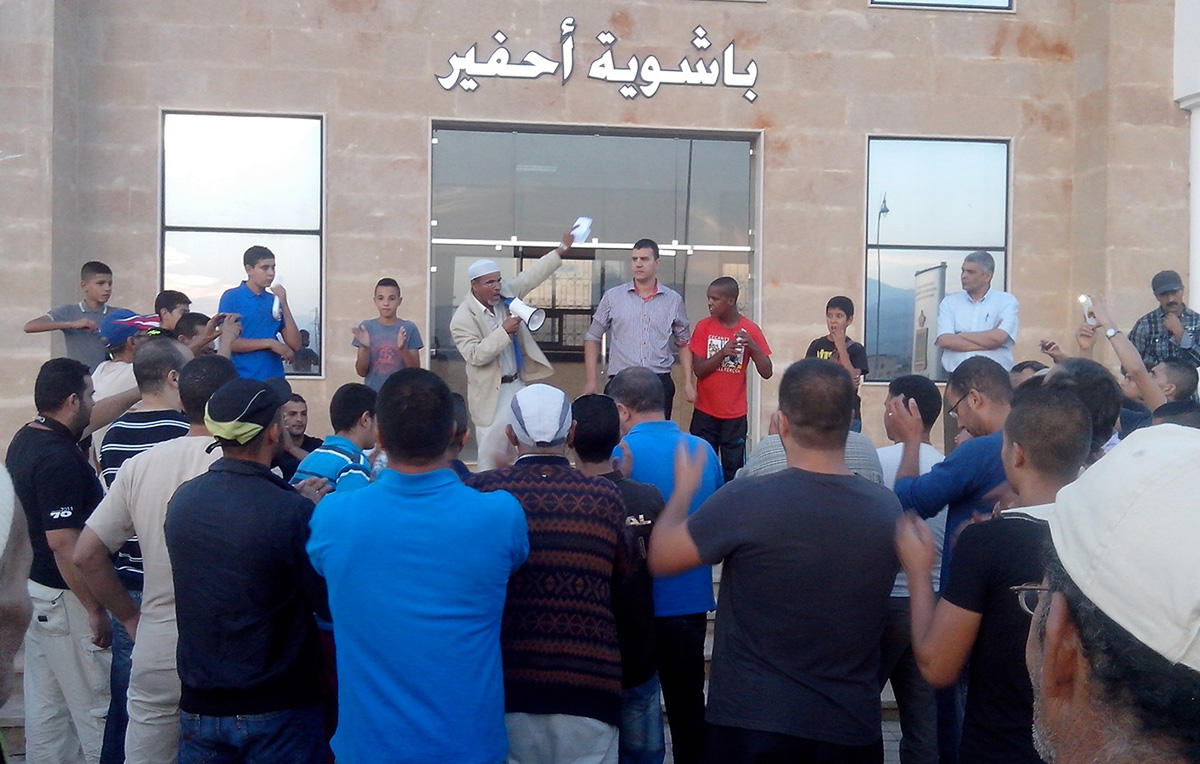
Without going into the details and subtleties of the Ahfir dialect, it is important to emphasize the rhythm, style, and intonation that distinguish it from other dialects. The people of Ahfir are recognized wherever they go by the way they speak, and it is not easy for outsiders to imitate or reproduce their accent. An expression such as “Ba Ahfir” has spread throughout various parts of the country, making our fellow townspeople well known for it, despite its simplicity, or perhaps because of it.
The spontaneity and naturalness with which people here speak likely stem from their character, upbringing, environment, and the various elements of their identity that have been shaped and fused over the years. Very few external influences have mixed with these traits, mainly because of the town’s relatively isolated geographic location compared to other cities.
As a result, the inhabitants have preserved the purity of their dialect and their way of communicating. This dialect has only been slightly affected by changes in social and cultural life, evolving mentalities, or transformations resulting from interaction with other populations and from internal and external migration.
Personally, whenever I visit my family in Ahfir, I strongly feel this reality. When a person lives among people from other Moroccan cities, they inevitably become influenced by their dialects and, over time, partially adopt their way of speaking and some of the expressions commonly used in that environment. They may even end up following similar ways of thinking and behaving. Then, after a period of time, when they return to their hometown of Ahfir, they immediately notice a difference in speech, expression, and communication compared to what they had become accustomed to elsewhere.
I personally see this as a form of richness, diversity, and openness that enriches one’s cultural background and strengthens certain aspects of intellectual and personal development.
What prompted me to discuss this issue was the contribution of Mr. “Abou Hidaya” to the forum “Dictionary of the Ahfir Dialect,” created by Mr. “Al Mokhtar” on March 8, 2010. Among the points raised by Abou Hidaya were the following:
“The terms commonly used among us are truly a precious treasure that enriches Ahfir’s collective memory. While gathering these expressions, I wished that specialists would help identify the origins of these words. I also call on the forum administrators to create an electronic dictionary that would preserve this linguistic heritage.”
(End of quotation, contribution No. R429, dated June 12, 2010).
In my opinion, this is an excellent idea that deserves support and encouragement from everyone interested in this field. By doing so, we would collectively carry out an important effort to document and preserve a local heritage that risks disappearing under the pressure of modernization and the passage of time.
Amar Bellahacen (30 June 2010)