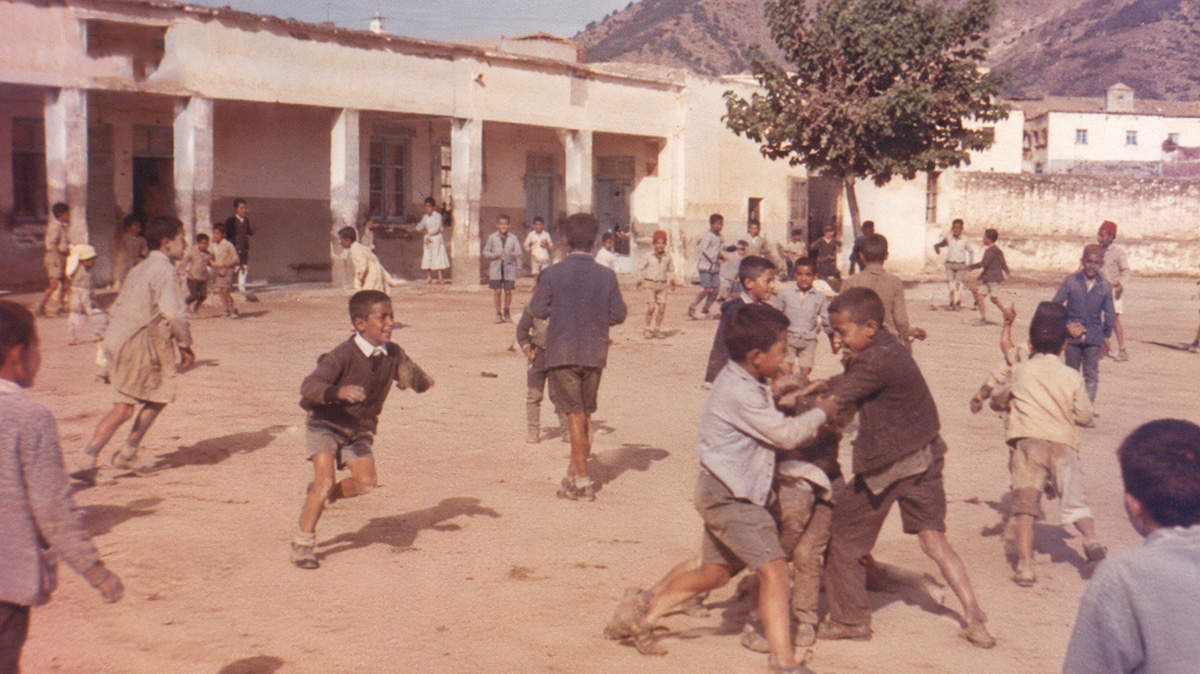
During the 1950s and 1960s, the issue of violence within schools was a major concern.
At that time, the phenomenon was widespread and deeply rooted. Teachers often used harsh discipline and treated students severely. Such behavior was generally considered normal, and few people condemned it or viewed it as unacceptable. On the contrary, many parents themselves encouraged teachers to use strict methods and even corporal punishment.
However, during the 1970s, a completely opposite trend began to emerge. Any violent act or behavior in the educational environment gradually came to be regarded as contrary to accepted educational principles. Guidelines were issued encouraging kindness and recommending the abandonment of all forms of pressure and mistreatment.
It is worth noting that this change occurred in most countries around the world. Students increasingly came to be viewed, rightly so, as individuals with fundamental rights, feelings, and personalities. This recognition required the adoption of modern pedagogical methods and a more humane approach to education and teaching.
Nevertheless, it must be acknowledged that despite the undeniable positive aspects of this new approach, its implementation was sometimes marked by excessive leniency and tolerance. This resulted in a degree of indiscipline and a weakening of respect for school rules, educational institutions, and the people responsible for them.
As a consequence, the current situation has emerged, characterized by a certain level of disorder and even insecurity, along with the spread of violence perpetrated by some students and their families against teachers and school administrators. In my view, this is a highly serious situation that is harmful to the proper functioning of the educational process, especially as incidents of aggression continue to occur both inside and outside schools.
What further worsens the problem is the indifference with which such acts are often met and the lack of effective measures to eliminate or contain them.
How, under such unfavorable conditions, can we expect teachers to perform their duties at the level required?
When we add to this the issue of overcrowded classrooms and the significant disparities in students’ academic levels, we can easily understand the decline in teachers’ morale and their reduced willingness to devote all of their abilities and energy to their work.
We are therefore far removed from the ideal image of the teacher immortalized by the great poet Ahmed Shawqi, who regarded teachers as worthy of the highest respect and esteem.
It is therefore both urgent and necessary for those responsible for the education sector to intervene with firmness and determination in order to halt the current deterioration. If this situation continues, it may soon become extremely difficult, if not impossible, to resolve.
Amar Bellahcen (10/11/2009)