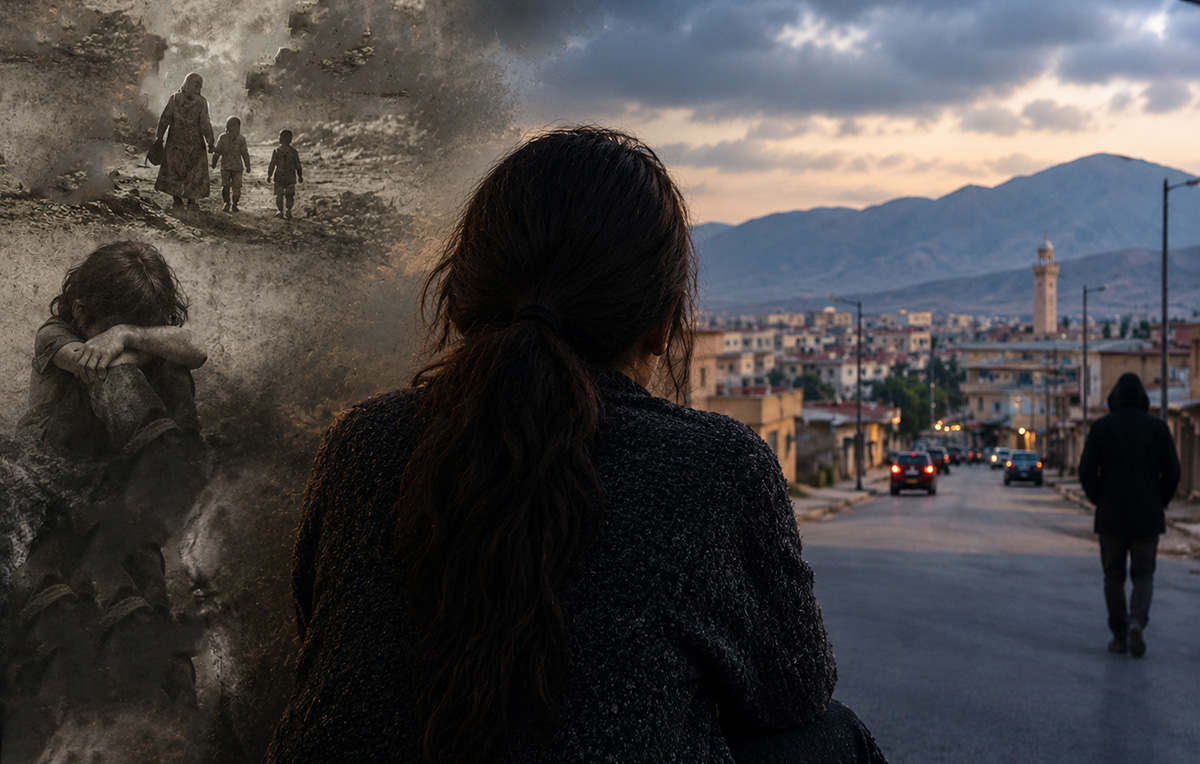
Have you ever noticed this constant anxiety, excessive caution, or sometimes irrational fear of the future among many residents of Ahfir? Why do so many people from Ahfir seem afraid of everything and nothing?
To understand today’s behaviors, we often need to dive into our collective memory and examine the environment in which the generations of the 1970s, 1980s, and 1990s grew up.
The Psychology of Trauma: When the Past Shapes the Present
Modern psychology has repeatedly shown that childhood experiences form the foundation of adult mental health. Traumas experienced during the early years of life do not simply disappear with time; they often continue to influence personality and relationships.
Physical or psychological violence destroys self-confidence and creates chronic anxiety.
A lack of emotional security generates a persistent fear of abandonment and difficulty trusting others.
Growing up in an unpredictable environment forces the mind into a state of constant hypervigilance, reacting intensely to even minor stress.
In Ahfir, for several decades, what is now recognized as traumatic was simply considered “normal.”
Childhood Under the Sign of Fear: School, the Street, and Authority
Those who grew up in Ahfir between the 1970s and 1990s remember a daily life marked by extreme strictness, sometimes bordering on cruelty.
1. School: From Learning to Punishment
At that time, not knowing your lesson did not simply result in a bad grade. Sometimes, it was enough for a teacher to dislike you, or for your family to be viewed unfavorably or simply be of modest means. Since everyone knew everyone else in the small town of Ahfir, some children seemed to start school with a social handicap before they had even opened a notebook.
Corporal punishment was common: slaps, humiliation, blows with a stick on the palms of the hands or the soles of the feet (the famous falaqa), and even makeshift whips made from olive tree branches. An unusual way to discover local botany!
Yet the worst punishments were often psychological. Some six- or seven-year-old children were forced, in front of their classmates, to swallow pages from their own notebooks or wear signs reading, “I am a donkey,” “I am a thief,” or “I am a liar.” Teaching methods that, fortunately, never appeared in any official educational handbook.
School, which should have been a place of learning and personal growth, sometimes felt more like an obstacle course.
And as if that were not enough, some parents, because of the mentality of the time or the belief that teachers were always right, would administer a second punishment when the child returned home. As a result, many students preferred to remain silent rather than take advantage of a special offer: double punishment for the price of one!
For many children of that era, getting home without physical pain, humiliation, or a second punishment was almost an achievement worthy of a gold medal.
2. Fear of Authority Figures
The mere presence of a police officer in the street was often enough to impose silence and stillness. Likewise, entering a government office or visiting a doctor could feel like a major challenge. Without a mediator or an influential person to support you, intimidation, mockery, and disrespect were commonplace.
3. The Law of the Neighborhood
In the streets, safety often depended on family protection. Without an older relative or a protective figure, children and teenagers were left to fend for themselves against stronger youths, quickly learning how to stay unnoticed in order to avoid trouble.
The Legacy of a Generation: Why Does This Fear Persist?
Growing up believing that the outside world is hostile, that authority is punitive, and that vulnerability is punished leaves deep and lasting scars.
Many people from Ahfir developed what might be described as defense mechanisms: excessive caution, hesitation to take initiative, fear of other people’s judgment, and a persistent distrust of institutions.
What some call “complexes” are often nothing more than the psychological scars of a time when self-protection was necessary for emotional survival.
Toward Awareness and Collective Healing
Recognizing this past does not mean blaming our elders or educators, who often acted according to the values and norms of their time.
However, honestly acknowledging these experiences is essential.
Understanding that this “fear of everything” may be the result of past conditioning is the first step toward overcoming it.
By providing today’s children with an environment built on listening, respect, and emotional security, we can break the cycle of trauma and help build a more confident, fulfilled, and peaceful Ahfir community.