The first time in my life that I attended a theatrical performance was in the late 1950s in the town of Ahfir, during a tour by an amateur theatre troupe affiliated with the National Liberation Front (FLN). This artistic event took place in the enclosure of the late El Hadj Si Mimoun, which was also used as a shelter for animals and a storage area for goods.
The performance was held at night, yet this did not prevent a large audience from attending. People came from all parts of the town and from the surrounding countryside to watch the play and enjoy the entertainment. Such opportunities were rare during those difficult years before independence. Moreover, this cultural event represented a unique occasion that no one wanted to miss.
I still remember that day being announced throughout the streets and alleys of the town by the public crier of the Aârfa tribe, who also served as the town herald. May he rest in peace. He was a noble man, tall in stature, with a slight limp in his walk.
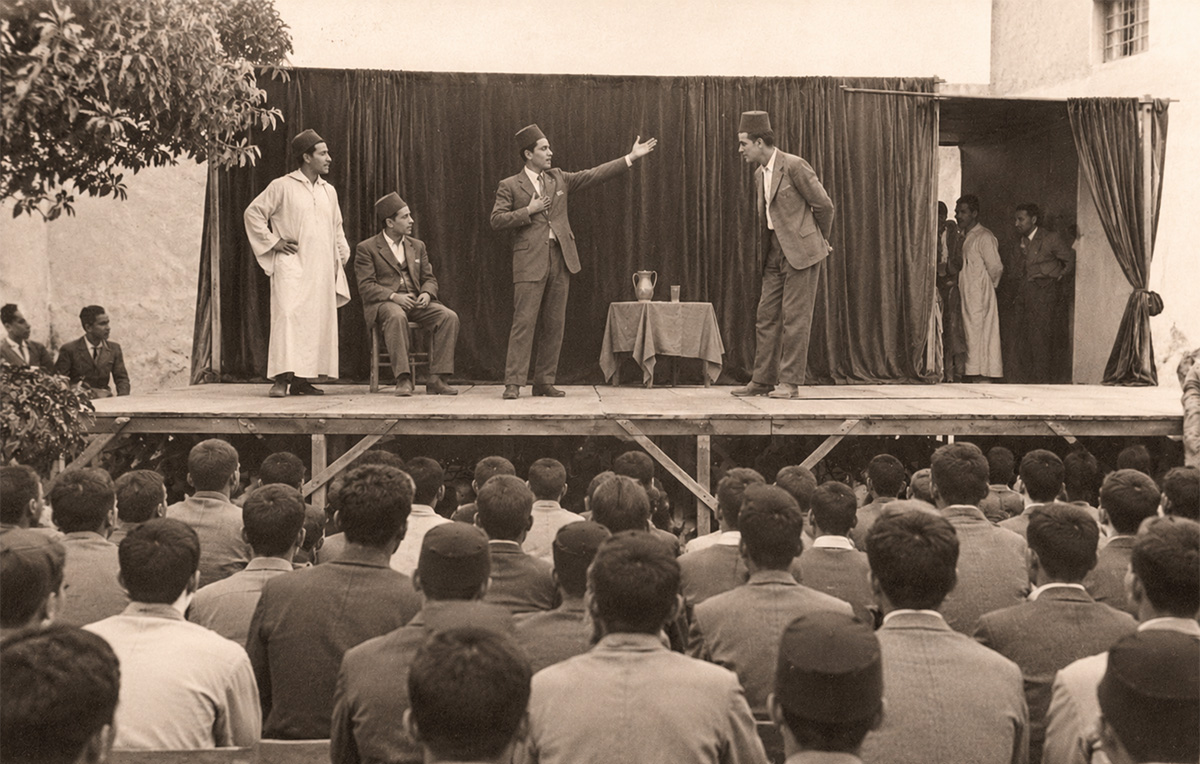
A stage had been specially erected for the occasion. It consisted of a wooden platform raised on supports. Behind it was a curtained area used as a dressing room for the performers. Many scenes were presented, some moving and emotional, others humorous and entertaining.
I particularly remember an absurd comic scene depicting prisoners of the Liberation Army, their hands bound and their feet shackled, at the prison barber’s shop. The prisoners were seated side by side on a long bench by two guards. The guards then covered their faces using a large brush dipped into a container filled with flour, imitating shaving soap and a shaving brush. Afterwards, the two wardens stood on either side of the bench holding a fake two-man saw meant to resemble a giant razor blade, and proceeded to perform a “collective shave” on the unfortunate prisoners.
Other scenes were also performed, although I no longer remember them clearly. They were interspersed with musical intervals during which soldiers dressed in green khaki uniforms sang patriotic songs. The audience’s warm and repeated applause created a festive and intimate atmosphere between the performers and the spectators. All of this helped strengthen the bonds of solidarity and brotherhood between Algerians and Moroccans.
It should be noted that, although such visits were infrequent, this was not the only time that an artistic troupe affiliated with the FLN came to Ahfir. The late El Oualid Cinema also hosted similar performances accompanied by documentary and newsreel films about the armed struggle for independence. Women and children attended the daytime sessions, while the evening screenings were reserved for men.
Those were memorable days, representing extraordinary moments for the inhabitants of Ahfir. Sadly, they have now largely faded from collective memory. Yet I believe it is important to revive the remembrance of these events, which form part of the town’s history and which, to some extent, shaped the character and destiny of a significant number of the “Ahfiris of both shores,” if I may use that expression.
Mohammed Khouja
2010