Introduction
In the name of God, with whose name nothing on earth or in heaven can cause harm, and He is the All-Hearing, the All-Knowing.
At the beginning of last week, some friends said to me: “Now that you are back among us after a long absence and years of separation, roll up your sleeves as you did in your youth. Gather us together once again and take us away from our homes so we can enjoy what Ahfir does not have but what Ajeroud once offered in abundance.”
Then they added: “Ajeroud has been violated. We want to show you another place before it suffers the same fate. The place is Qomqom El Baz, near Capouyaoua.”
Rather than discussing that issue, I would like to republish an article I wrote for the former website Ahfir Online on May 26, 2006, entitled Nostalgia for Ajeroud.
Why republish it now? Because while traveling to Qomqom El Baz, we passed through Ajeroud and were saddened by what we saw: the damage caused by Mr. Real Estate, Mr. No-Conscience, and Mr. “Me First, and After Me the Flood,” as one of my frustrated friends described them.
Before concluding, I wish everyone a blessed Ramadan. May God bring it back to all of us with health, blessings, forgiveness, and prosperity. May God accept our deeds and yours.
Abdelhakim Tasirart
The Article
Nostalgia for Ajeroud
Before presenting my personal analysis, I would like to describe the environmental concerns raised about the Fadesa project in Saïdia.
From the outset, the Moroccan government praised the project, claiming it would create jobs, boost economic activity, and contribute to the development of the entire region.
Nevertheless, the project faced strong criticism. Environmental organizations argued that it would inevitably lead to an unprecedented ecological and economic disaster. One member of the association “Human and Environment” even suggested replacing the name “Fadesa” with “Scandal,” citing numerous irregularities discovered before and during its implementation.
Critics pointed to violations of Moroccan and international environmental regulations, especially those concerning impact assessment studies. The site, they argued, was home to wildlife of global importance. They also warned that golf courses and swimming pools would consume large quantities of freshwater, worsening water shortages already affecting parts of the region. In addition, an entire forest was destroyed, along with coastal sand dunes that had served as a natural barrier against flooding and rising sea levels.
Many people are impressed by the visible transformations taking place in Saïdia and assume that the city will soon become a modern Mediterranean tourist destination similar to famous European resorts.
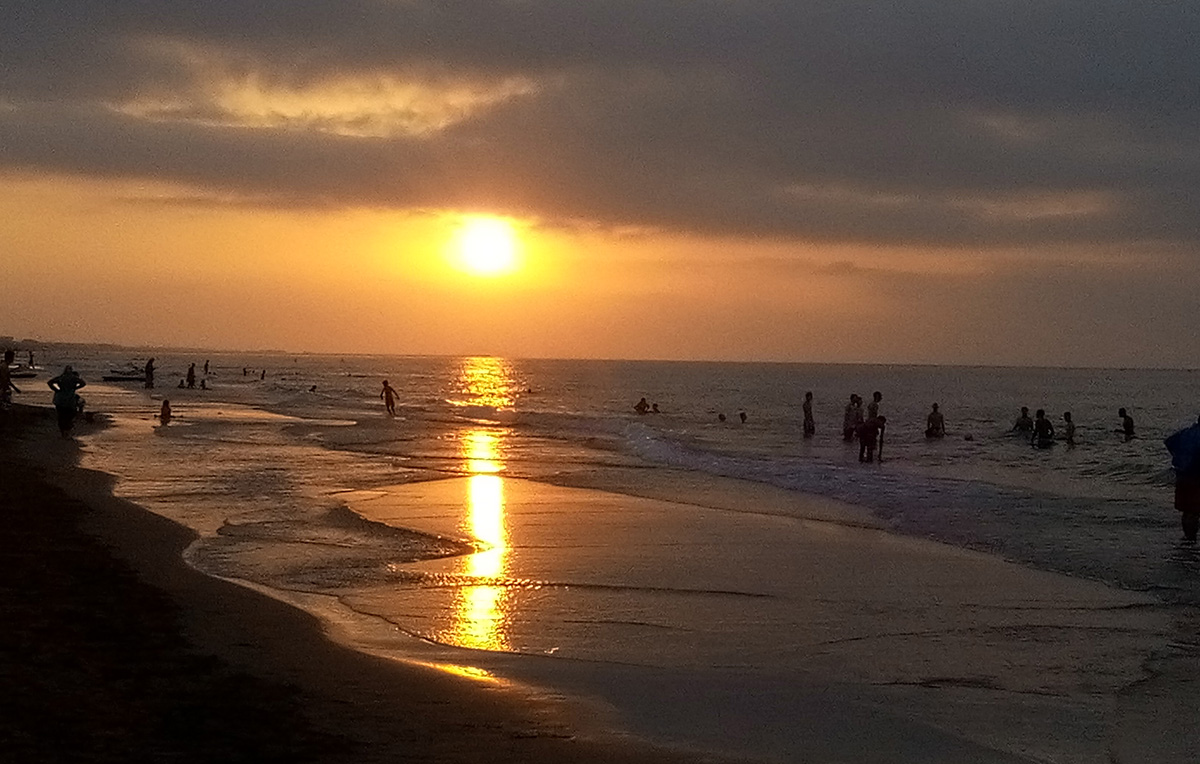
Others see things differently. Drawing from historical memory, they recall the old name Ajeroud, the true historical identity of Saïdia. Merely mentioning the name evokes memories of its landscapes and a longing for what has disappeared.
They remember the simple Sunday market, the beach once informally divided between men and women, and the coastline that extended beyond political borders. The inhabitants of Ajeroud and those across the border lived as neighbors. Like fish moving freely through the sea, they crossed between Morocco and Algeria without passports or restrictions.
There are also memories of holiday camps, friendships, meetings, and even disagreements that quickly turned into laughter and shared joy.
From a sociological perspective, the author refers to Ibn Khaldun’s theory that as cities grow larger and wealthier, their moral values often decline. Tourist cities, he argues, encourage behaviors that may negatively influence local communities. He fears the emergence of two separate cities: one for ordinary people and another reserved for wealthy visitors.
The religious perspective reinforces these concerns. According to the author, such tourist developments may encourage illicit relationships, drug consumption, nightlife, bars, and other activities viewed as morally questionable. Economic benefits, he argues, are often used to justify practices that would otherwise be rejected.
The notion of the “public good” also raises economic questions. In the short term, projects like this undoubtedly create jobs and stimulate economic growth. In the long term, however, they primarily promote consumption. Some philosophers argue that consumer society has already reached excessive levels in the Western world and that this model is spreading globally, gradually erasing cultural differences. Modern people increasingly consume to satisfy desires rather than genuine needs.
Dear friends, Saïdia resembles a simple and innocent young woman admired by honest and modest young men. Yet her father chose to give her away to wealthy strangers from afar. They took advantage of her, and eventually she became available to everyone. Some will exploit her, while others will remain faithful to their sincere love. Those are the true lovers of Ajeroud.
In its simplicity, Ajeroud was a city of harmony. It brought happiness to the poor, the traveler, and ordinary people alike. Even the noise of summer never disturbed its spirit. The new Saïdia of Fadesa, with its wealth and grand construction projects, may satisfy a small minority while disappointing many others, especially the younger generation.
The longing for Ajeroud reminds me of the nostalgia expressed by the pre-Islamic poet Tarafa ibn al-Abd for his beloved Khawla. In the same spirit, I say:
“The ruins of Ajeroud remain at Barka Tanger,
visible like the fading traces of a tattoo upon the hand.”
End
Abdelhakim Tassirart
22/05/2006