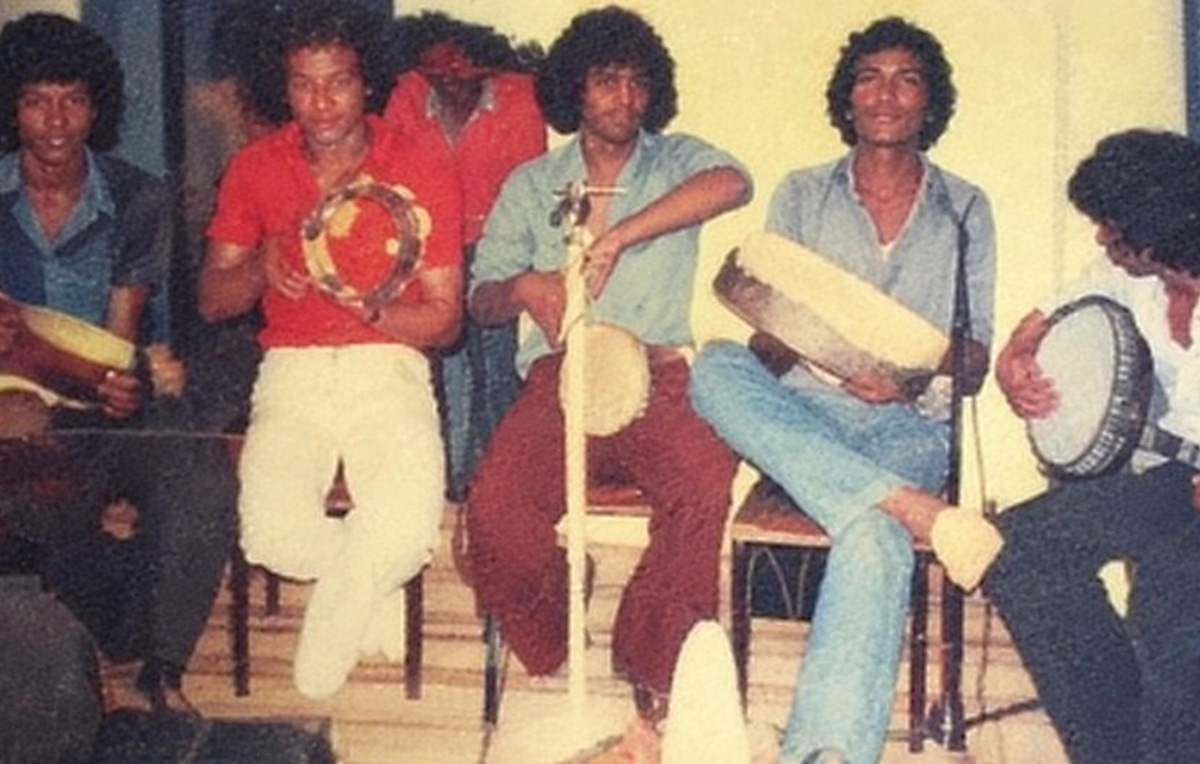
During an interview conducted by the Ahfir-Europe website with the well-known Ahfir singer Ahmed Tahiri, known as “Ahmed Banjo,” one particular issue caught my attention. It concerned an incident that took place during the 1980s when he reportedly refused to participate in a national celebration marking Morocco’s Independence Day without financial compensation.
According to his account, he and his music group were brought before the chief caïd (local authority representative) of Ahfir at the time. The caïd allegedly ordered the auxiliary forces to detain them for three days in what was described as a “zriba” (an enclosure). In doing so, the author argues, they were treated like a flock of sheep rather than as artists, despite being a local musical group comparable in spirit to Nass El Ghiwane.
The article criticizes what it describes as an old culture of control, repression, and domination over citizens. During that period, anyone who dared to refuse the orders of a caïd or local authority risked being labeled as being against the State or the King. Threats and intimidation were seen as common tools of authority.
The author argues that the caïd failed to appreciate the true meaning of Independence Day, which symbolizes freedom, liberation, and the breaking of colonial chains. Yet, according to the article, these artists were unjustly imprisoned in contradiction with human rights principles and basic justice.
The text then recalls the famous saying attributed to Caliph Omar Ibn Al-Khattab:
“Since when have you enslaved people when their mothers gave birth to them free?”
According to the author, this principle of human dignity was ignored by some officials entrusted with public authority.
The article further notes that fear remained deeply rooted in society. Ahmed Banjo’s calm recollection of the event is interpreted by the author as evidence of how normalized such oppression had become. He questions how meaningful change can occur if injustice, humiliation, and submission are accepted.
The author suggests that Ahmed Banjo still seems influenced by the mentality of the 1980s, despite the democratic aspirations emerging in Morocco around 2012 and across the Arab Spring movements. He contrasts resignation with the famous poetic line:
“If the people one day desire life, destiny must answer their call.”
Addressing Ahmed Banjo directly, the writer explains that his intention is not personal criticism but rather an academic analysis of the discourse presented in the interview.
The article goes on to argue that while musicians such as Nass El Ghiwane faced repression in the past, writers, journalists, and intellectuals continue to experience different forms of pressure and censorship today. These individuals are described as artists of the pen, ink, and ideas.
The discussion then turns to journalist Rachid Nini. The author notes that the word “Nini” evokes traditional lullabies sung by mothers to help children sleep. He uses this metaphor to criticize what he sees as attempts to silence free voices advocating freedom and dignity.
The imprisonment of Rachid Nini for one year is presented as an effort to silence critical speech and prevent public awakening. The author argues, however, that repression often strengthens the impact of words and ideas once freedom is restored.
Finally, he recalls that Moroccan Prime Minister Abdelilah Benkirane reportedly stated after the legislative elections of November 25 that Rachid Nini’s place was with his family. The author expresses hope for greater freedom of expression and calls for the release of all political prisoners, presenting it as both a human rights and humanitarian obligation.
H. Dkhissi
2010