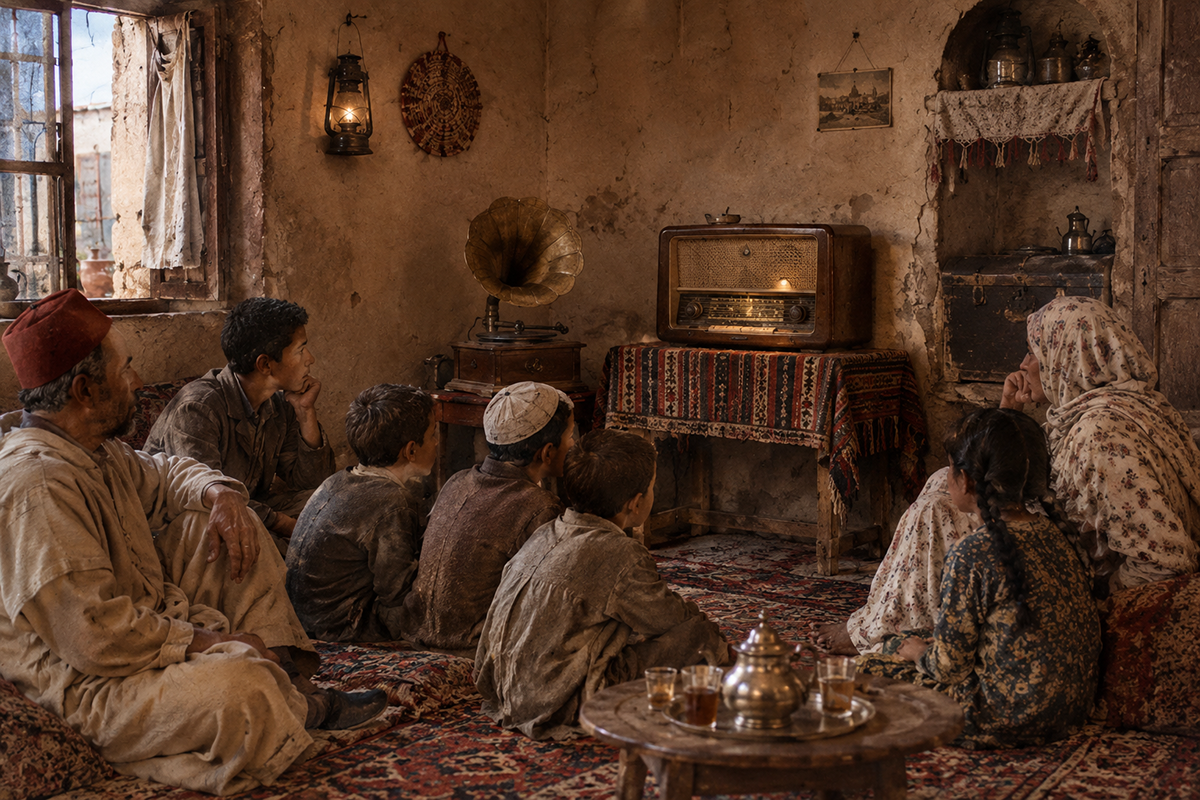
When we were children, our only means of entertainment were the radio and the phonograph. We listened to whatever news, programs, and songs were broadcast at the time.
Television had not yet arrived, or at least was not widespread, and modern communication technologies did not even exist in the imagination of their future creators.
I remember how passionate we were about the popular songs of that era, especially Moroccan and Algerian ones.
We spent long hours listening with great pleasure to the works of famous artists of traditional popular music:
Houcine Slaoui, Rabah Driassa, Mohamed Fouiteh, El Hadj El Anka, Ahmed El Bidaoui, Khlifi Ahmed, Hajja El Hamdaouia, Ahmed Wahbi, Nora, and many other pioneers of Maghreb folk music.
I must admit that listening to those melodies, rhythms, and chants brought me immense joy. We felt deeply connected to this authentic popular art, which strengthened our cultural pride during the early years of independence and freedom.
Those musical creations were part of our identity, our emotions, and our heritage.
We were especially enchanted by the beautiful mawawil and melodies performed by artists like Khlifi Ahmed, Houcine Slaoui, Rabah Driassa, and El Hadj El Anka. Their music had a wonderful impact on us, without distinction or preference — only the beauty of the voice, the quality of the performance, and the mastery of the rhythm mattered.
Another genre we loved passionately was the local traditional music performed by the cheikhs and arfa, whether from eastern Morocco or western Algeria. For us, Cheikh Ahmed, Younsi, Ténissani, Hamada, or Cheikha Rimitti were all equally valued.
We cannot overlook the widespread fame of Cheikha Rimitti. Her songs filled the cafés, resonating with powerful popular authenticity and receiving great admiration.
Many people from our region still enjoy this musical style today.
I remember that until the early 1970s, some cafés in Ahfir continued to play her songs, responding to the wishes of fans of this traditional music. She had a major influence on the emergence and spread of what later became known as raï. Her melodies and compositions were freely reused by anyone, without restriction.
Amar Bellahcène – April 28, 2010