


On November 6, 1975, in southern Morocco, King Hassan II, may he rest in peace, conceived a noble and civilized initiative without precedent in the history of liberation from colonial rule. He launched the March of Dignity, the March of the Qur’an and Courage, the March that reunited the people with their King. Its purpose was to recover a rightful part of Moroccan territory without shedding a single drop of blood, a land that was still under Spanish colonial control, and to reconnect with fellow citizens who had long affirmed their Moroccan identity. Shortly thereafter, the Sahara was returned, and once the red Moroccan flag was raised over this noble land, development projects began and continue to this day, just as they do throughout the Kingdom.
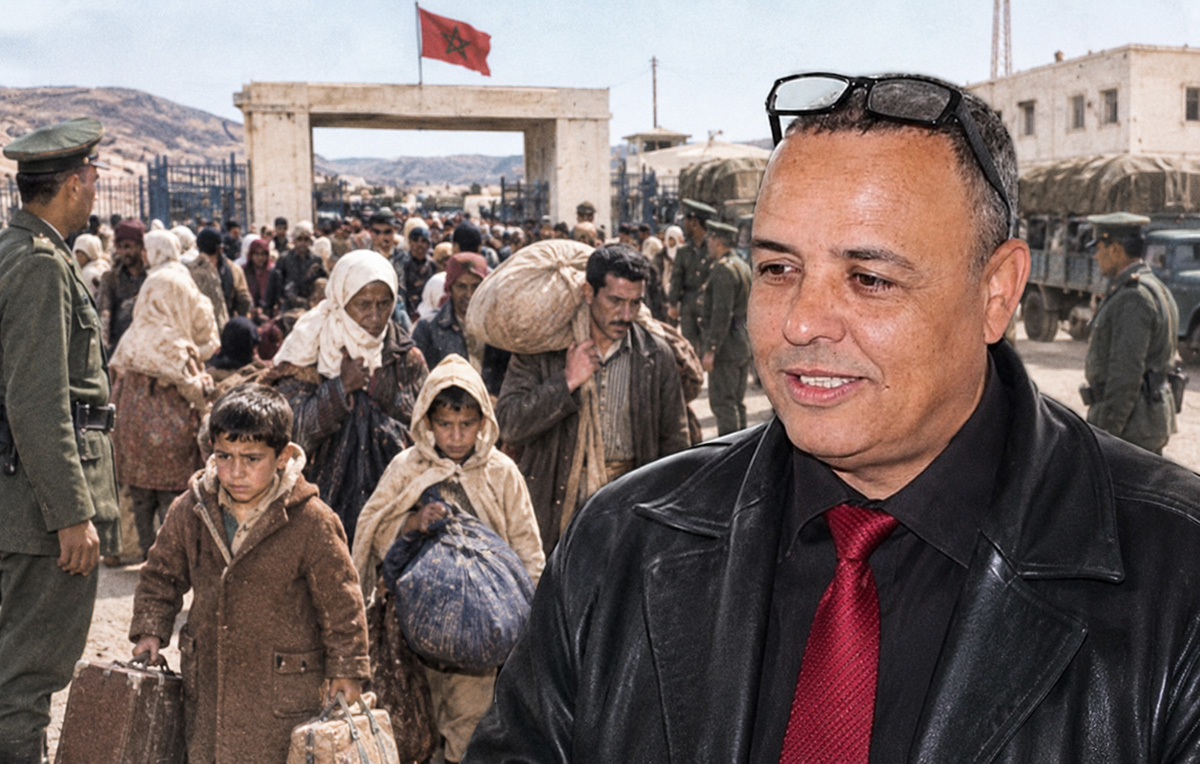
In contrast, during that same year of 1975, another march took place in eastern Morocco, one remembered by the author as a march of shame, humiliation, and suffering, referred to as the “Black March.” According to the author, it resulted from decisions taken under the presidency of Houari Boumédiène (Mohamed Boukharouba), then President of Algeria. Through border crossings near Oujda and Ahfir, thousands of Moroccan families who had lived in Algeria for many years were expelled. They were stripped of nearly all their possessions and sent away during a cold and rainy winter. Children, the sick, and pregnant women were not spared. The tragedy coincided with Eid al-Adha, one of the most important religious celebrations for Muslims. Among those expelled were former resistance fighters and descendants of resistance fighters who had once gone to Algeria to contribute to its struggle for independence.
At the time, I was a thirteen-year-old boy and fully aware of what was happening around me. Since our home in Ahfir was located less than half a kilometer from the border, I witnessed the events closely. I remember the worn-out buses arriving from Tlemcen, discreetly escorted by Algerian soldiers to the narrow bridge over the Kiss River, where passengers were left to cross toward us. I remember the ululations welcoming our brothers and sisters who had been unjustly expelled from their homes. I remember our soldiers carrying children and luggage on their shoulders while we competed to offer assistance. I remember my aunt Rabia, her husband, and her children, who were among the expelled and who now live comfortably in Marrakech, where they were warmly welcomed by her brother, my uncle Abdelkader Mouhande Ouaïssi El Azaoui. I remember the spontaneous solidarity shown by the families of Ahfir, Oujda, and Berkane. I remember our classrooms filling with new students whose accents differed from ours, and how we and our teachers helped them catch up with lessons and assignments. I also remember that Algerian families living among us were neither harmed nor mistreated. Under the protection of the highest authorities, relations of friendship, kinship, and neighborhood were preserved.
The years have passed, and Morocco continues to build and develop its nation without seeking to harm others, while, according to the author, Algeria’s military leadership continues policies perceived as hostile. On one side stands a Morocco that consistently calls for Maghreb unity, regional cooperation, and shared economic prosperity. On the other stands an official Algeria that, in the author’s view, promotes division and outdated ideological approaches.
History shows that Morocco’s hand remains extended toward its brothers, while development and reform projects continue throughout the Kingdom. Meanwhile, according to the author, the Algerian state continues policies that have created deep divisions, even within its own society.
In our country, in our desert, mountains, plains, and coastlines, our differences are a source of strength. We may disagree, even clash, yet we understand that among us there are honorable people and opportunists, rich and poor, strong and weak, law-abiding citizens and lawbreakers. Nevertheless, all are united by a single national motto: God, Homeland, King.
As long as this spirit endures, the nation will remain on the path of reform, progress, and development under the guidance of a wise King.
Abdellah Bendada El Azaoui
06 November 2017

