There is no doubt that work provides a person not only with income, but also with dignity, respect, and a sense of self‑worth. It keeps one away from boredom, idleness, and moral decline.
In this context, can we consider that the job of carrying heavy loads fulfills these needs and meets such aspirations?
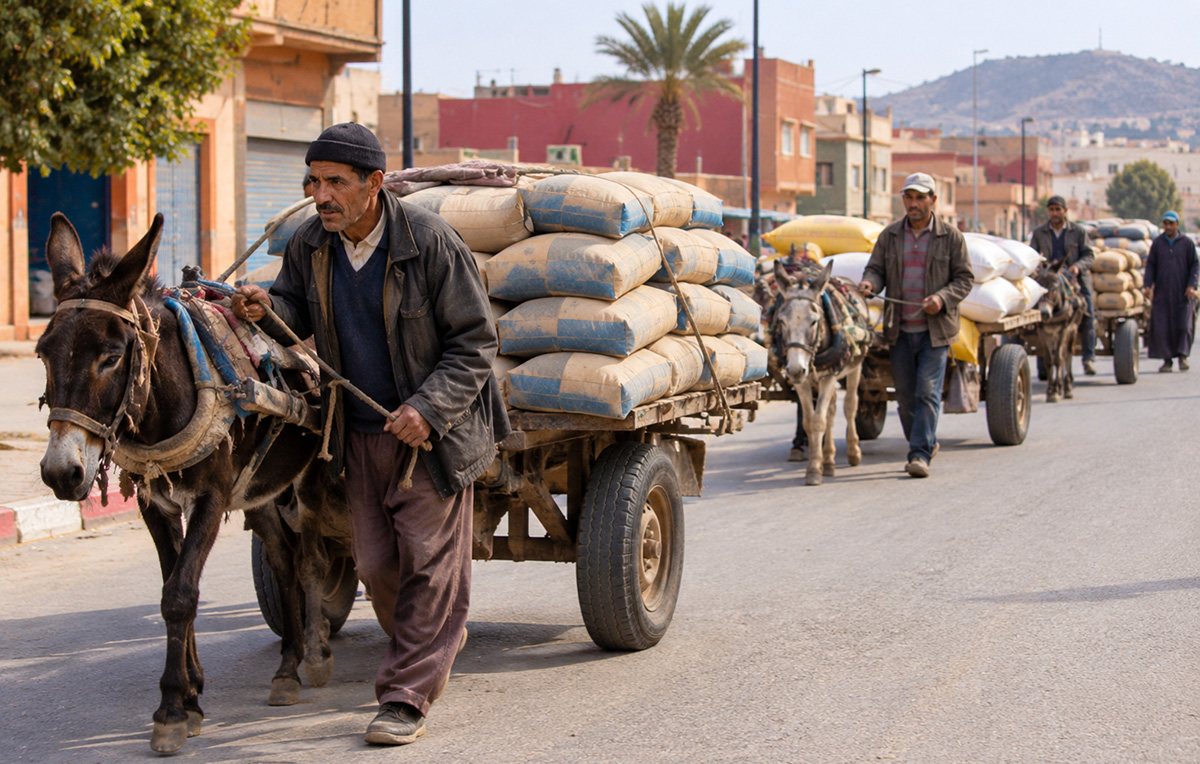
We all have in mind the image of those individuals whose activity consists of transporting burdens from one place to another, unloading trucks, carrying bags of cement, flour, coal, sugar, and so on. This group of workers has always existed in our town.
Generally, they are people with no training or professional skills. Their financial situation is extremely poor. Their only asset is their physical strength, hardened over time by life’s hardships.
These men have no health coverage and no guaranteed income if they stop working due to exhaustion, illness, or any other incident that may affect any human being.
In Ahfir, we have always seen these hardworking men performing their exhausting tasks in various fields: with wholesalers, during moves, unloading construction materials, carrying crates of fruits and vegetables, etc.
Each of us has certainly encountered many of them — provided we pay attention to their presence, care about their condition, and acknowledge them as human beings deserving respect and appreciation.
There is no need to mention names: they are numerous, belonging to different segments of the population, especially the poorest and most marginalized.
They are dignified and courageous men, fighting tirelessly to feed themselves and their families. They never chose this job willingly, nor accepted this condition out of satisfaction. If they had access to a less painful, better‑paid, and more respectable job, they would have chosen it without hesitation.
Amar Belhcen (11/03/2010)