It is impossible to speak about the Beni Znassen tribes in the late 19th century without mentioning Oulad El Bachir. They were the true holders of power throughout the Oujda region.
The names that inspired fear were: El Bachir, Messaoud, and his three sons: El Haj Mimoun, El Haj Mohamed, and El Haj Mohamed El Sghir.
They had limitless ambitions and were ready to commit any imaginable atrocity to preserve their authority.
Even General Martanbrey admitted that he retreated before the strength of El Haj Mimoun during a battle in 1895.
Among the other tribes and influential figures of the time, we note:
The sworn enemies of Oulad El Bachir: Oulad Lahbil, led by Boulanouar Ould Lahbil, killed on January 17, 1903.
Lkarrarja of Beni Mankouch, represented by caïd Mohamed El Krouj or Ahmed.
Zrayera, led by Mohamed Zarzour.
Oulad Zaïm, led by Mohamed Ezzaïmi, son of Mokhtar, son of El Haj Mokhtar, son of Si Mohamed Mokhtar, who died in 1885.
Tayeb Ould Ali Ourabah, who served as caïd in 1910.
Ziyanba, led by El Mir Ould El Haj El Bachir.
Abnharen, led by Mohamed Ould Belhcen Ould Ettaher.
In 1875, Sultan Moulay Hassan learned of the growing influence of Oulad El Bachir and appointed Ould El Bachir as governor of the Oujda region, believing he could impose order.
But the opposition was enormous, and Ould El Bachir responded with extreme violence, plunging the region into even greater chaos.
In 1876, the Sultan sent his troops to restore security and remove the governor.
Ould El Bachir refused to obey.
The Sultan summoned him, granted him safe conduct, but once he appeared before him, he imprisoned him.
Rival tribes seized the opportunity to take revenge on Oulad El Bachir.
The Mahayas, for example, ambushed El Haj Mimoun and killed him, then searched for his son Mustapha and slaughtered him publicly.
Many members of Oulad El Bachir fled to Algeria, but El Haj Mohamed El Sghir stayed behind to try to restore the prestige of his tribe.
He was sentenced to seven years in prison in Fez, but was quickly released when El Rouki raised the banner of rebellion.
He was freed to help the Makhzen bring Beni Znassen back under control, as some tribes had begun to follow El Rouki.
But the opposite happened: Oulad Lahbil adopted El Rouki’s cause, against Oulad El Bachir.
This marked the beginning of a new wave of violence:
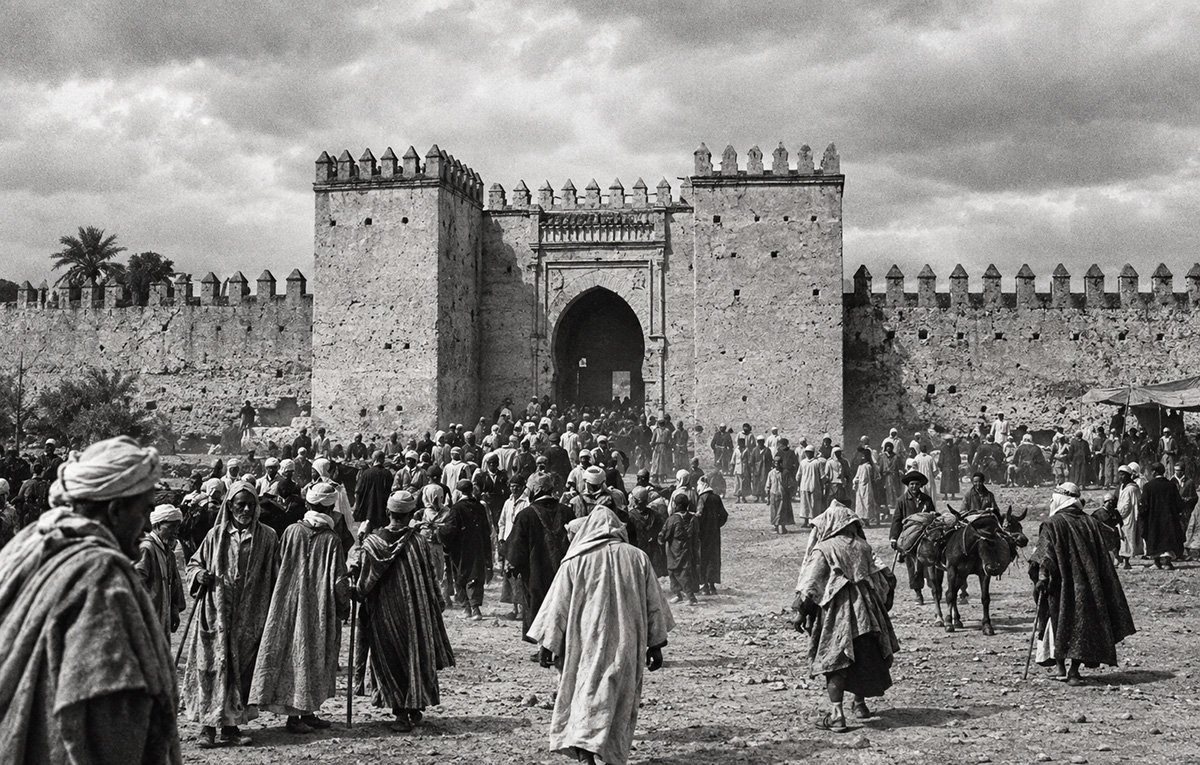
men walking through markets carrying severed heads.
Mohamed Erragi – 2008